Best No-Code App Builders for Small Businesses in 2026: Create Apps Without Coding
webwritetech1@gmail.com
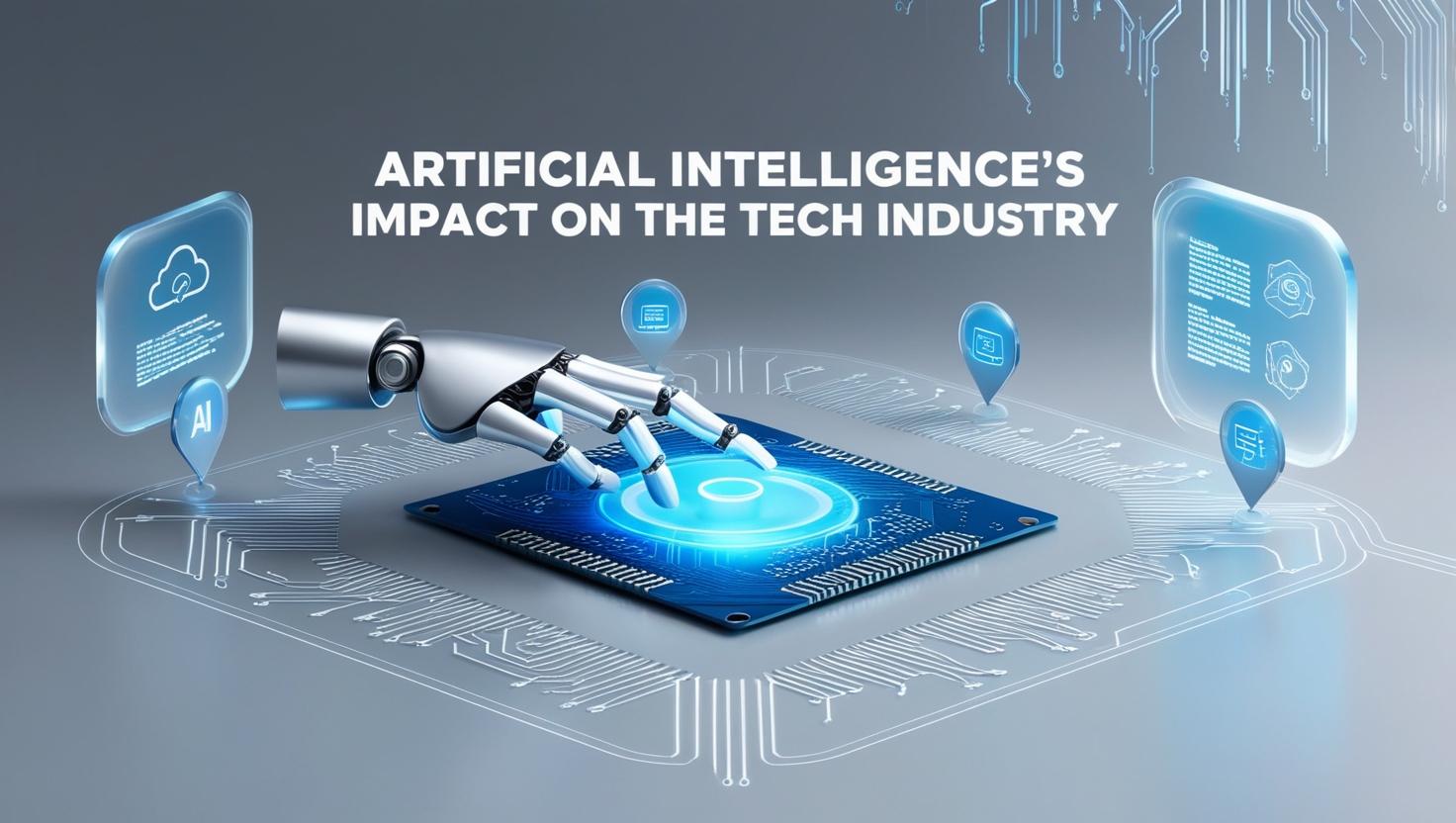
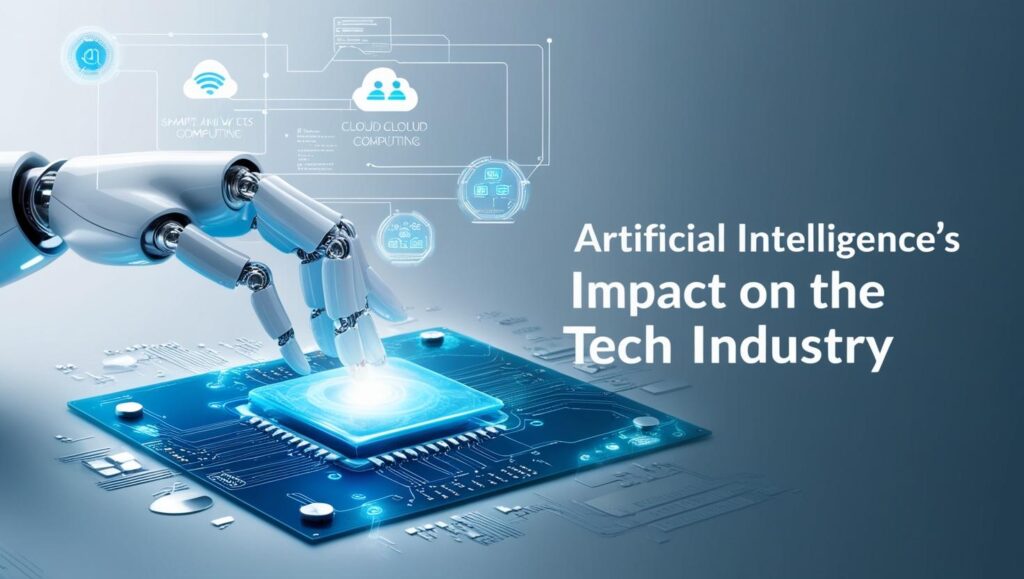
Artificial intelligence (AI) is not just a buzzword anymore — it’s the pulse of the modern tech industry. In 2025, we’re witnessing a complete transformation of how companies operate, build, scale, and serve users — all due to the accelerating power of AI. From automated code generation to intelligent customer support, from cybersecurity to quantum computing integrations, artificial intelligence is leaving a profound impact.
In this comprehensive guide, we explore the artificial intelligence impact on the tech industry, helping you understand where we’re headed, how it affects your business or career, and how to strategically adapt for future growth.
Artificial Intelligence refers to the simulation of human intelligence in machines that are programmed to think, learn, and solve problems. In 2025, AI systems are capable of natural language conversations, self-learning from data, and executing complex operations across industries.
From rule-based systems in the early 2000s to today’s real-time decision-making tools powered by generative AI, the shift has been exponential. Technologies like OpenAI’s GPT, Google DeepMind, and IBM Watson paved the way for today’s sophisticated systems.
AI has drastically changed how software is built and maintained.
AI tools now detect bugs proactively and recommend fixes based on historical code behavior.
Helping Keywords:
AI is optimizing data storage, balancing loads, and predicting server downtimes before they happen. Tech giants like AWS, Azure, and Google Cloud have AI-optimized cloud architecture.
AI can detect abnormal behavior in networks and stop cyber-attacks in real time.
With AI, tech companies can analyze big data faster and more accurately. This helps in customer segmentation, product development, and targeted marketing.
From CRM platforms to email marketing tools, AI is automating workflows and boosting personalization.
AI is optimizing chip design using EDA (Electronic Design Automation) tools. NVIDIA, Intel, and AMD are leading this race.
AI supports:
AI integrates with smart homes, wearable devices, and industrial IoT to enable real-time automation and self-healing systems.
Helping Keywords:
AI handles repetitive tasks, allowing human workers to focus on strategic, creative roles.
Companies are saving millions through AI-led automation in development, operations, and customer service.
Startups and enterprises can rapidly prototype, test, and scale AI-driven solutions.
AI algorithms analyze user behavior to offer customized experiences — from Netflix recommendations to app UI changes.
AI may unintentionally reinforce racial, gender, or cultural biases present in training data.
Sensitive data used for training models must be protected. Poor handling can lead to massive compliance issues (e.g., GDPR, HIPAA).
Roles involving routine work are at risk. However, new roles in AI governance, prompt engineering, and AI ethics are emerging.
Training large models requires significant GPU power and energy. This is a barrier for small companies without cloud credits or partners.
Helping Keywords:
AI tools like ChatGPT, Jasper, and Midjourney help startups with:
With platforms like OpenAI, Runway, and Pinecone, small businesses can integrate powerful AI features without building infrastructure.
Startups can now compete with giants by offering smart, AI-enhanced experiences.
Helping Keywords:
Google’s Bard is being used across Android and Search to provide natural interaction layers for users. DeepMind is focused on AGI research.
Microsoft 365 Copilot boosts workplace productivity, and Azure AI services offer pre-built APIs for enterprises.
AWS provides:
NVIDIA powers most of today’s AI infrastructure. Its new GH200 Grace Hopper Superchip is revolutionizing AI computing.
Quantum computers can speed up AI model training exponentially, reducing years of computing to minutes.
Generative AI tools will become co-pilots for designers, marketers, and developers.
Expect stricter laws around AI data handling, transparency, and accountability.
From drones to data centers, autonomous AI systems will operate without human input.
Helping Keywords:
Learning Python, TensorFlow, NLP, and prompt engineering can prepare you for the AI-powered future.
Use AI to boost your efficiency. Think of it as a smart assistant, not a competitor.
As AI builders, developers and data scientists must ensure that AI systems are transparent, unbiased, and ethical.
The impact of artificial intelligence on the tech industry is profound and irreversible. From software engineering to user experience, from startups to tech giants — every corner of the industry is evolving.
For Maryland tech professionals, small business owners, and global digital innovators, the path forward lies in adapting, integrating, and upskilling around AI. At Web Write Tech, we believe AI is not just the future — it’s the now.
Stay ahead of the curve. Embrace the power of AI today — because tomorrow is already here.

webwritetech1@gmail.com

webwritetech1@gmail.com